
The Most Durable Materials for Bathrooms
Ensure Your Bathroom Survives The Tough Treatment
Bathrooms are among the hardest-working rooms in our homes. Between water, steam, humidity, cleaning products and daily use, almost every surface is regularly exposed to conditions that can cause materials to deteriorate.
That means choosing bathroom materials shouldn't be based on appearance alone.
A beautiful vanity that begins swelling around the edges after a few years isn't much of an investment. Neither is a gorgeous floor that's difficult to clean or a shower surface that requires constant maintenance to keep it looking good.
The good news is that today's bathroom materials offer plenty of ways to combine durability with great design. Whether you're planning a complete bathroom renovation or simply choosing new finishes, here are some of the most durable materials worth considering.
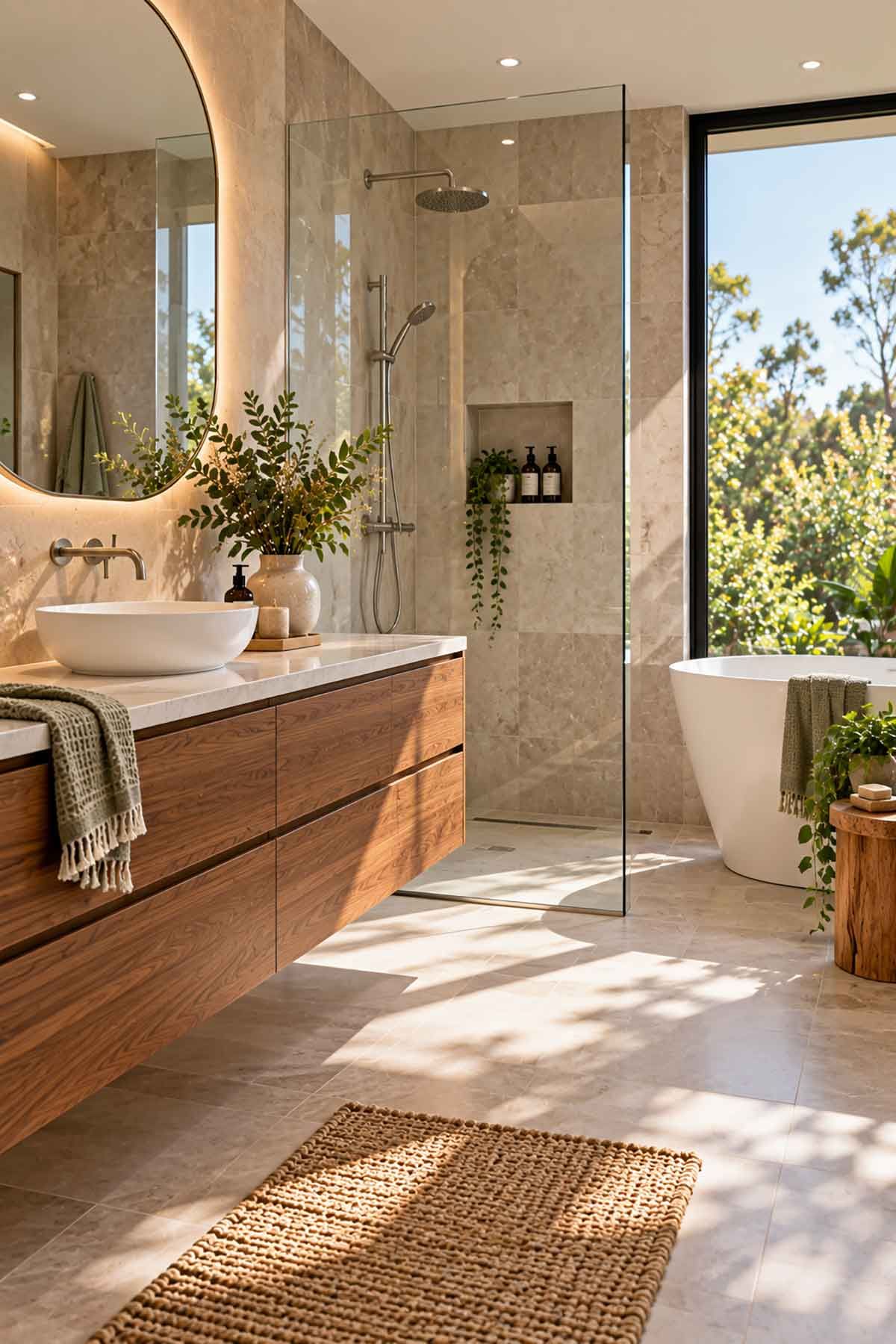
What Makes a Material Suitable for a Bathroom?
When we talk about durability in a bathroom, we're looking for more than something that's simply tough. Bathroom materials need to cope with a fairly demanding combination of conditions.
Ideally, you want materials that offer:
- Good water and moisture resistance
- Resistance to mould and mildew
- Resistance to scratches, chips and everyday wear
- Easy cleaning
- Resistance to commonly used household cleaning products
- Low maintenance requirements
- Stability in changing temperatures and humidity
- A long usable lifespan
It's also important to understand that water-resistant and waterproof don't necessarily mean the same thing. Some materials will comfortably tolerate occasional splashes but aren't suitable for constant exposure to water. Where you use a material can therefore be just as important as the material itself.
1. Porcelain Tiles
If you're looking for one of the best all-round materials for a bathroom, porcelain is difficult to beat. Porcelain tiles are dense, hard-wearing and highly resistant to moisture. They can be used on bathroom floors, shower walls and general wall areas, making them an incredibly versatile option.
Another major advantage is the enormous variety now available.
Porcelain can convincingly reproduce the appearance of:
- Marble
- Travertine
- Terrazzo
- Concrete
- Limestone
- Timber
This means you can achieve the look of a higher-maintenance material without necessarily taking on the same level of upkeep.
Large-format porcelain tiles and slabs can be particularly effective in contemporary bathrooms because they reduce the number of grout lines.
For flooring, however, appearance shouldn't be your only consideration. Choose a tile with a finish and slip resistance suitable for its intended bathroom location. A highly polished tile might look spectacular in a showroom, but it may not be the best choice for a wet bathroom floor.
2. Ceramic Tiles
Ceramic tiles are another durable bathroom option and are often more affordable than porcelain. They're particularly useful for walls, splashbacks and areas that don't experience the same level of wear as the floor.
The difference between porcelain and ceramic largely comes down to how they're manufactured and their resulting density and water absorption characteristics.
For high-use floors and very wet areas, porcelain is often the stronger choice. For walls and decorative areas, however, good-quality ceramic tiles can provide years of service.
They're also available in an enormous range of colours, shapes and patterns, making them a great option when you want to introduce personality without spending heavily on every surface.
3. Durable Vanity Surfaces
The bathroom vanity has to tolerate water splashes, cosmetics, soaps, cleaning products and plenty of everyday use.
For Australian bathrooms, there has also been a major change in the types of manufactured stone surfaces available.
Australia introduced a nationwide prohibition on the manufacture, supply, processing and installation of engineered stone benchtops, panels and slabs from 1 July 2024 because of the health risks associated with workers' exposure to respirable crystalline silica. Some products, including certain porcelain and sintered stone products, are excluded from the engineered stone definition under the regulations.
For a new bathroom vanity, durable alternatives can include:
- Porcelain slabs
- Sintered stone products
- Solid-surface materials
- Suitable natural stone
- Other compliant manufactured surfaces
Porcelain and sintered surfaces can be particularly appealing because they offer excellent resistance to moisture, stains and everyday wear while being available in a wide range of stone-inspired finishes.
When comparing vanity surfaces, don't just look at the sample. Ask about staining, heat resistance, cleaning requirements, warranties and whether the product is suitable for bathroom use.
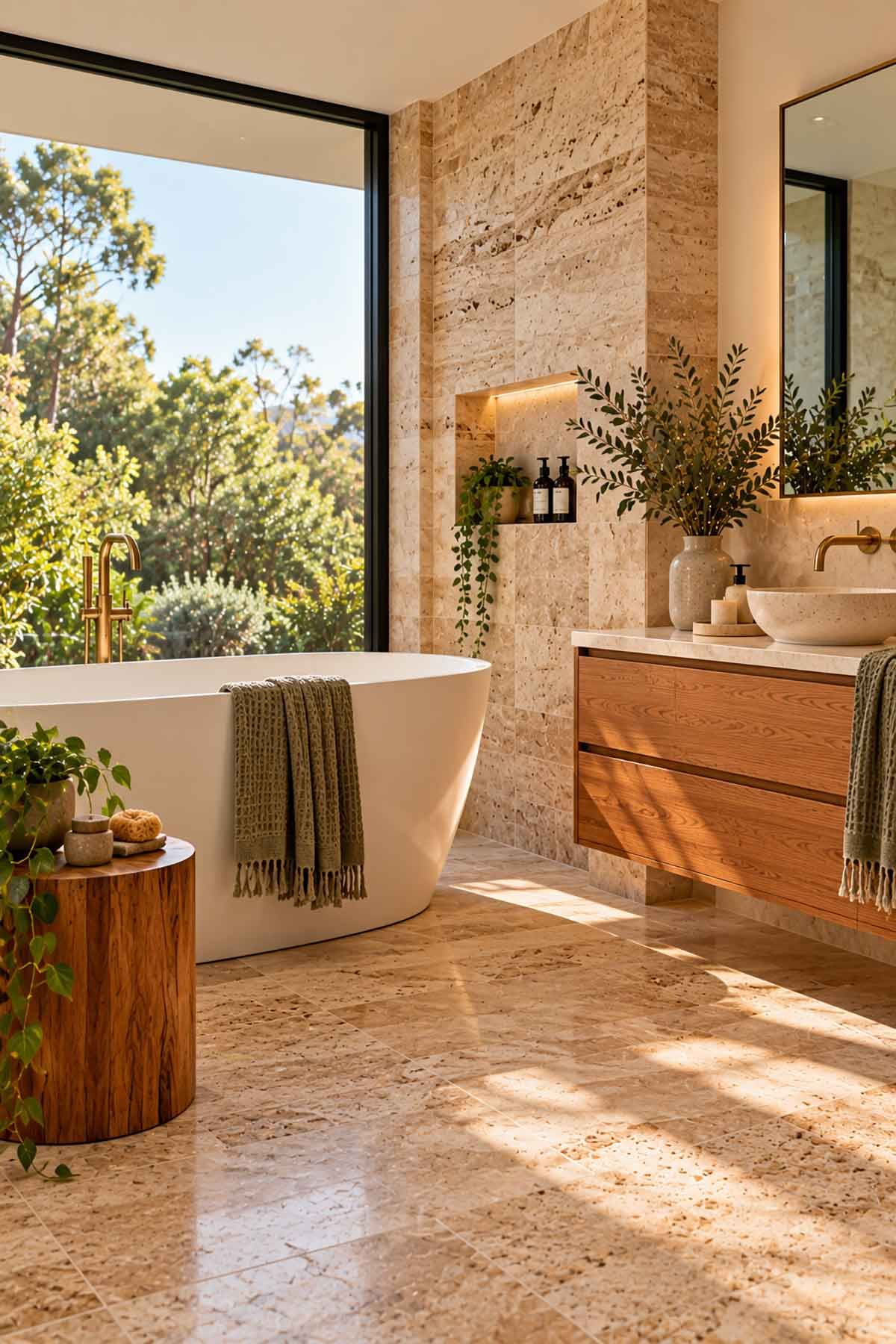
4. Natural Stone
Natural stone can be incredibly durable. After all, we're talking about a material that has already existed for thousands or millions of years.
But durable doesn't necessarily mean maintenance-free.
Granite, marble, travertine and other natural stones can all be used to create beautiful bathrooms, but their characteristics vary considerably.
Some natural stones are porous and may require sealing. Certain products can also stain or react to acidic or abrasive cleaning products.
Marble is a perfect example. It can last for decades, but it develops character as it ages and isn't necessarily the right choice for someone who wants every surface to remain pristine.
If you're considering natural stone, ask yourself whether you're comfortable with ongoing maintenance and the possibility of some patina developing over time.
If you want the appearance of natural stone with less maintenance, a good-quality porcelain reproduction may be worth considering.
5. Solid-Surface Materials
Solid-surface products can be a fantastic option for contemporary bathrooms. They're commonly used for vanity tops, integrated basins and other bathroom surfaces where a smooth, streamlined finish is desirable.
One of their biggest advantages is the ability to create surfaces with very subtle joins. Integrated basins can also eliminate the awkward edges where grime often collects around traditional inset or countertop sinks.
Depending on the particular product, minor marks or damage may also be repairable. Solid-surface materials work particularly well in minimalist bathrooms where you want the vanity and basin to appear almost like one continuous form.
As always, check the manufacturer's recommendations for bathroom use and cleaning.
6. Waterproof Wall and Shower Panels
Tiles aren't your only option for bathroom walls.
Modern waterproof wall and shower panels can provide a continuous surface with far fewer joins than traditional tiles.
That's particularly appealing if cleaning grout is somewhere near the bottom of your list of favourite weekend activities.
Bathroom wall panels are available in finishes that imitate stone, concrete, marble and other materials, as well as simple solid colours.
Fewer joins can make cleaning easier, but installation remains extremely important. Seams, edges and penetrations need to be properly treated according to the particular system.
If you're considering panels, choose a product specifically designed and approved for use in wet areas rather than simply selecting a decorative wall panel that claims to be moisture-resistant.
7. Stainless Steel
Stainless steel isn't usually the first material we think of when designing a bathroom, but it's already present in many of them. You'll commonly find it used for:
- Tapware
- Shower fittings
- Drains
- Towel rails
- Accessories
- Cabinet hardware
- Some basins and vanity features
Good-quality stainless steel is strong, easy to clean and highly resistant to corrosion. The quality and grade matter, though.
This can be particularly important in coastal Australian homes, where salt in the air creates a more demanding environment for metal fixtures and fittings.
If you live near the coast, ask suppliers whether the particular finish and material you're considering are recommended for coastal conditions.
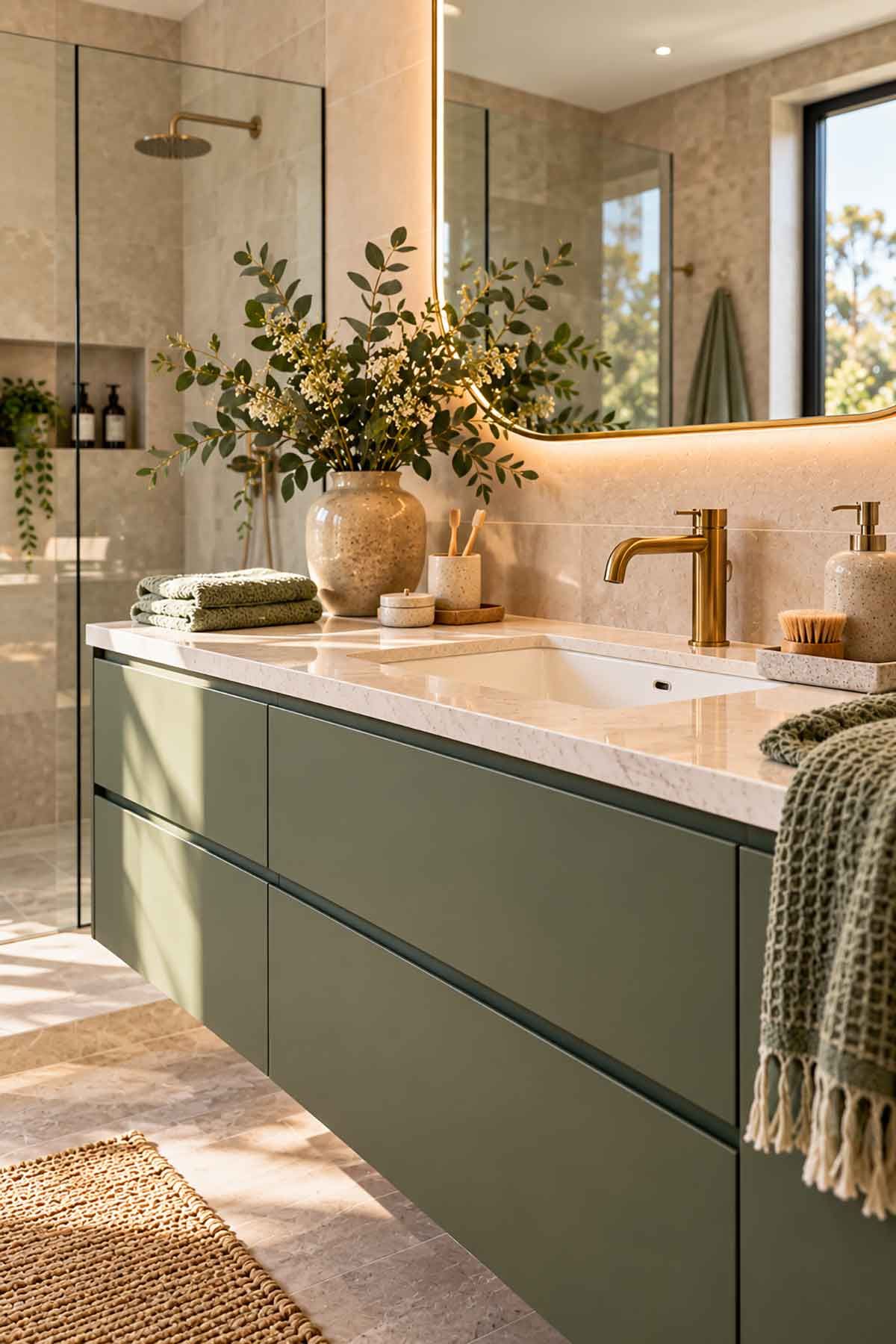
8. Timber
Timber in a bathroom can sound like a contradiction. Water plus wood doesn't exactly seem like a recipe for longevity.
However, timber can work beautifully in bathrooms when the right species, construction and protective finish are used.
It can be particularly effective for:
- Vanities
- Shelving
- Mirror frames
- Decorative wall features
- Furniture
- Small accent areas
The key is limiting unnecessary exposure to standing water and making sure the timber is appropriately sealed and maintained.
Timber also brings something extremely valuable to bathrooms visually. With so many hard surfaces such as tile, glass and stone, timber introduces warmth and texture.
If maximum durability with minimal maintenance is your priority, keep timber away from areas receiving constant direct water exposure and use it as an accent rather than the primary wet-area surface.
9. Moisture-Resistant Cabinetry
Vanity cabinetry doesn't receive nearly as much attention as the benchtop sitting above it, but it deserves just as much thought.
Poor-quality cabinetry can swell, warp or delaminate when repeatedly exposed to moisture.
Problems often begin around:
- Cabinet edges
- Door edges
- Plumbing penetrations
- The base of the vanity
- Areas around the basin
Look for cabinetry specifically designed for bathroom environments, with moisture-resistant substrates and properly finished edges.
Quality laminate finishes can be extremely practical because they're easy to clean and available in everything from simple white to convincing timber finishes.
Wall-hung vanities can also have practical advantages because they keep the cabinet itself away from wet bathroom floors while making cleaning underneath easier.
10. Toughened Glass
Glass is another remarkably durable bathroom material when the correct product is used. Toughened safety glass is commonly used for shower screens and bathroom partitions because it's strong, moisture-resistant and doesn't deteriorate when exposed to water.
Frameless glass can also help a bathroom feel larger by allowing sightlines to continue through the room.
The biggest complaint about glass usually isn't durability. It's cleaning.
Water spots, soap residue and mineral deposits can quickly become visible, particularly in areas with harder water.
Regular cleaning and a squeegee after showering can make a considerable difference. Some glass products are also available with surface treatments designed to make ongoing cleaning easier.
What Are the Most Durable Bathroom Flooring Materials?
Bathroom flooring has to cope with water, foot traffic, cleaning and occasional impacts, all while providing a safe surface to walk on.
For most households, porcelain tile is one of the strongest all-round choices. It's durable, moisture-resistant, easy to clean and available in an enormous range of finishes.
Natural stone can also provide exceptional longevity, although it may require more maintenance.
Large-format porcelain is particularly appealing if you want fewer grout lines, but make sure the tile's surface is appropriate for flooring and wet conditions.
Whatever you choose, slip resistance should be considered alongside appearance. The most beautiful bathroom floor in the world isn't much use if you're frightened to walk across it with wet feet.
What Are the Most Durable Materials for Shower Walls?
Shower walls experience some of the highest levels of direct water exposure in the bathroom.
Good options include:
- Porcelain tiles
- Large-format porcelain
- Suitable waterproof shower panels
- Properly installed natural stone
Large-format surfaces can reduce the amount of grout in the shower, which may make ongoing cleaning easier.
That doesn't mean grout is inherently a bad choice. Good installation, appropriate products and proper maintenance can result in a tiled shower that lasts for many years.
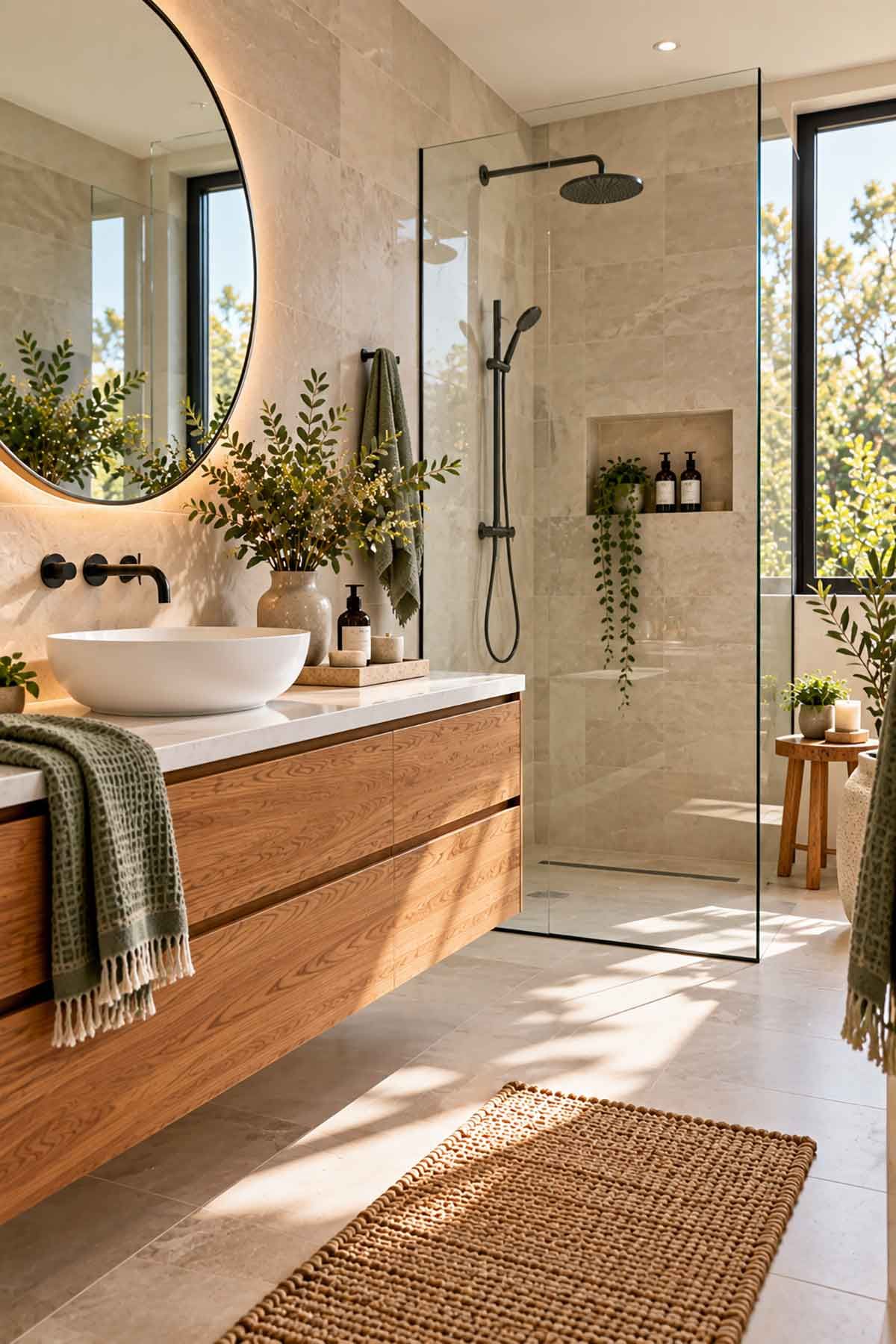
What Are the Best Materials for Bathroom Vanities?
When choosing a bathroom vanity, think about the cabinet and benchtop as two separate material decisions. A beautiful stone top won't help much if the cabinet underneath begins swelling.
For the cabinetry, consider moisture-resistant materials specifically intended for bathrooms.
For the benchtop, porcelain, sintered surfaces, solid-surface materials and suitable natural stones can all be worth investigating.
Timber can also be beautiful, but it needs appropriate protection and a little more care. The best combination depends on your budget, design preferences and tolerance for maintenance.
Bathroom Materials That May Need More Maintenance Than You Think
Some materials can perform beautifully in bathrooms but require more work than homeowners initially expect.
Marble
Beautiful and potentially very long-lasting, but it can stain, etch and develop a patina.
Unsealed Natural Stone
Depending on the type of stone, moisture and bathroom products can cause staining or discolouration.
Timber
It can last extremely well when properly protected, but damaged coatings or prolonged exposure to water can create problems.
Small Tiles
Small tiles themselves can be very durable, but using hundreds of them means considerably more grout to clean and maintain.
Cheap Cabinetry
Budget cabinetry with poorly protected edges can be vulnerable to moisture penetration and swelling.
Low-Quality Plated Fixtures
A cheap finish that begins wearing or discolouring after a few years can make an otherwise beautiful bathroom look tired very quickly.
None of these materials are necessarily bad choices. You simply need to understand the maintenance involved before committing to them.
Don't Forget Waterproofing and Installation
This may actually be more important than choosing between two different types of tile. The visible finishes aren't the only things protecting your bathroom from water.
Australian building requirements include specific waterproofing and water-resistance provisions for wet areas, including shower floors, walls, junctions and penetrations. The National Construction Code also references AS 3740 for wet-area waterproofing.
A premium tile installed over a poorly waterproofed bathroom can still end in disaster. Good bathroom construction relies on the entire system working together, including:
- Waterproofing
- Drainage
- Falls to wastes where required
- Adhesives
- Grout
- Sealants
- Penetrations
- Substrates
- Correct installation
This is one area where saving money on workmanship can become very expensive later. Use appropriately qualified trades and make sure your renovation complies with the requirements applicable in your state or territory.
Durability Doesn't Mean Sacrificing Style
One of the best things about modern bathroom materials is that choosing durability no longer means creating a room that looks like a public swimming pool.
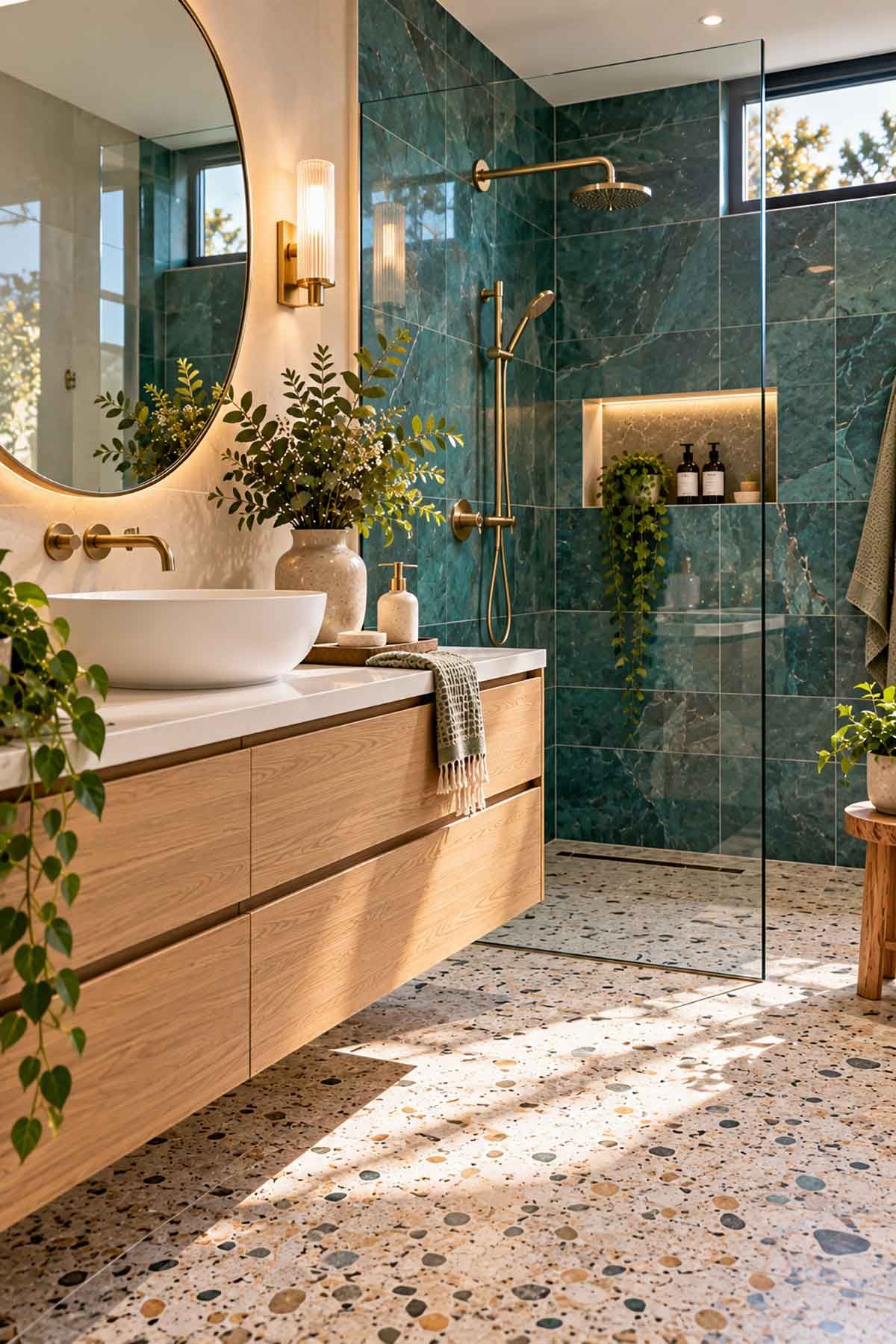
Porcelain can recreate the appearance of marble, travertine, terrazzo, concrete and timber. Large-format slabs can create dramatic stone-inspired walls without requiring the maintenance associated with some natural materials.
Timber-look cabinetry can add warmth without necessarily using solid timber, while brushed metal fittings, textured tiles and coloured cabinetry can introduce personality.
You can even mix materials.
A bathroom might combine a durable porcelain floor with stone-look shower walls, a timber-look vanity, a solid-surface benchtop and quality metal fittings.
The result can feel warm, layered and luxurious while still being designed to cope with everyday life.
Choosing Bathroom Materials That Will Last
The most durable bathroom isn't necessarily the one with the most expensive finishes. It's the one where materials have been chosen for the conditions they'll actually experience.
Porcelain is an excellent starting point for floors and wet-area walls. Durable vanity surfaces, moisture-resistant cabinetry, toughened glass and quality fittings can then create a bathroom that requires relatively little maintenance.
Natural stone and timber can absolutely have a place too, provided you're comfortable with the additional care they may require.
Most importantly, don't overlook what's happening underneath those beautiful finishes. Quality waterproofing, correct installation and good workmanship are fundamental to creating a bathroom that still looks and performs beautifully many years after the renovation is finished.
Choose the right material for the right location, be realistic about how much maintenance you're prepared to do, and you can create a bathroom that's both beautiful and built to last.

About The Author
I'm Channing and I am the driving force behind Platypus and Pine. I've had over 30 years of experience in designing, renovating and customising Australian homes.
I've used everything from aluminium to velvet as decor choices and love a wide variety of styles and themes.
My absolute favourite is Mid Century Modern and I was fortunate enough to spend 2 weeks in Palm Springs for Modernism week just last year.